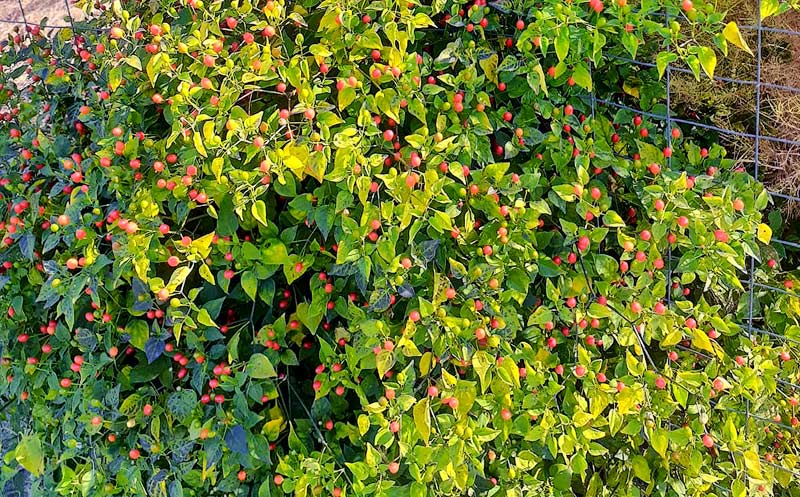
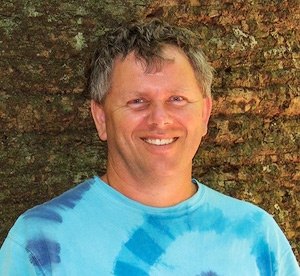
John is from Eskdale in the Brisbane Valley, Queensland, Australia. He has spent most of his life on his farm where he has planted an exceptional amount of trees, regenerating the forest and ecosystem around his property.
John has always studied and implemented new ways to improve the growing of plants in a very self-sustaining way, and he also just happens to be exceptionally good at growing his own food!
Welcome
David:
So, welcome John, and thanks so much for your time today in discussing some of the benefits of growing your own food.
As you well know, the current global restrictions have meant people are now spending more time at home, and are finding they need new ways of becoming more self-sufficient. I wanted to discuss with you today some of the benefits of growing and eating your own food, and in particular, what it does for our body, our mind, and how it also nourishes our spirit through connection with the earth.
Connecting with the earth
So, firstly could you tell us a little bit about your experiences with growing your own food?
John:
Yes, it’s very much about connection to the earth, listening to what it is telling you, and observing nature, which is a very big part of everything I do here. Growing my own food is largely dependent on water, which is one of the scarcest resources, or one of the most difficult to manage. It’s either a flood or a drought, so I certainly are not in a position, water wise, to provide myself with all my food, but what I can grow is a good supplementation. If I don’t have anything in the cupboard, I can usually find something in the garden to knock up a bit of a feed.
David:
Awesome, that’s great John. With the water restrictions and water management, are there any particular foods or plants that you find you are able to grow that are a lot easier than others in those kind of conditions?
John:
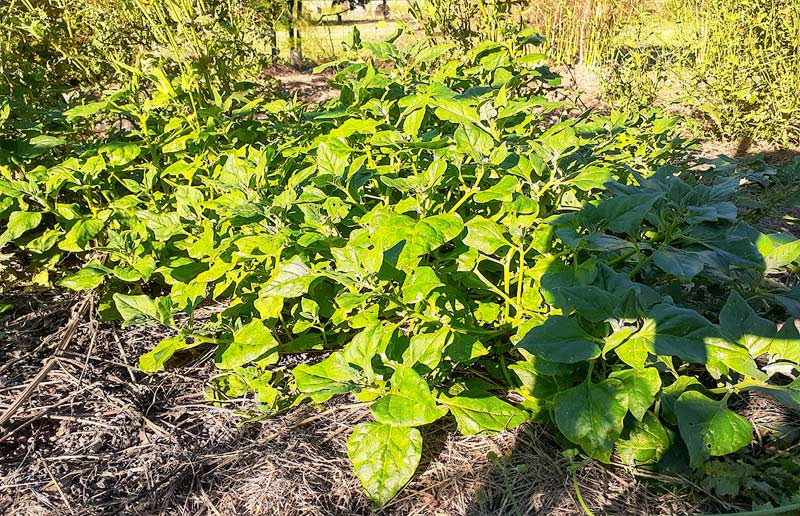
Yeah, absolutely. The whole process is one of trial and error. Try this, see if it works, try that, see if it works. After a while I’ve come up with a few hardy things in the veggie garden that seem to survive in the harsh conditions that give me something to eat. Things like New Zealand spinach or warrigal greens, which is a real hardy plant that self-sews and comes back whenever it rains so it looks after is self pretty much, which is a good thing for me because I now work full-time and don’t have a lot of time to devote to nurturing things. They have to be able to survive on their own.
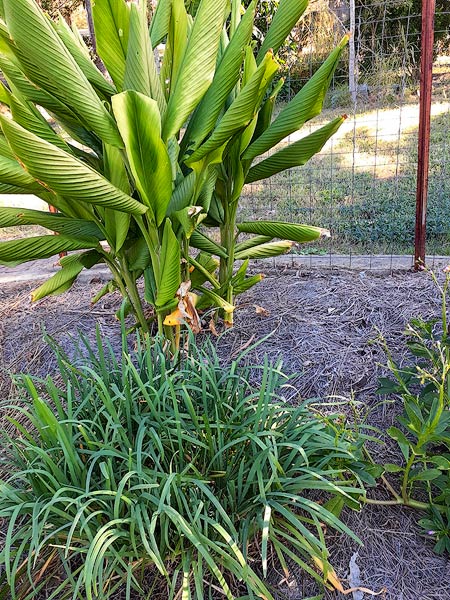
Other things in the garden are asparagus, garlic chives, some jacimba, which is a kind of bean, but you eat the tuber – like a giant sweet potato. The rest of the plant is toxic, so you can only eat the tuber – don’t eat the beans! Last year it struggled because it was in the middle of a drought, but this year it took off like crazy because we had a big flood and enough water for it to grow crazy and produce some huge tubers!
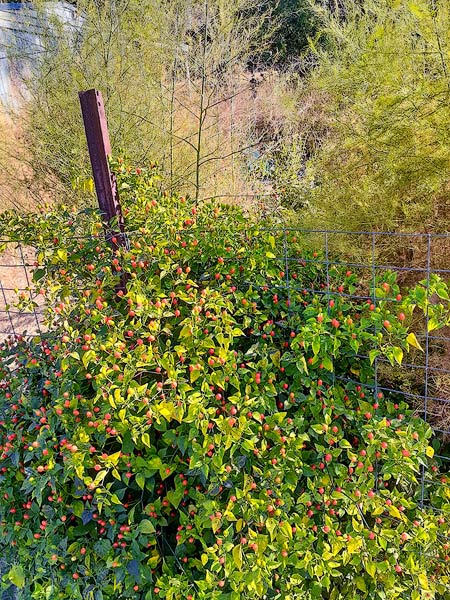
Then there are some things that grow well but I don’t like them, or don’t agree with me. Cherry tomatoes grow like weeds but are not good for me, unfortunately, so they are off the menu. I just had lunch and made a salad with about half of it was out of the veggie garden, and it’s really, really good to get some fresh stuff into your body. Nothing compares to any bought stuff, doesn’t matter how good or fresh or organic it is, nothing compares to stuff that comes straight out of the garden as far as nutrition and taste and everything goes.

David:
When you ingest fresh food out of the garden, do you feel the benefits or life-force of that plant really nourishing your body?
John:
Absolutely, it’s full of energy. You can really taste it, smell it, feel it. There is just no comparison with anything you can buy. It’s also because of the kind of energy I put into it as well. I do things in a very conscious way, and try to listen to plants, to their needs, and try to give them what they are asking for. They certainly respond.
David:
That’s so very interesting. One of the questions I was going to ask you was in communication with the food, both when you are planting, growing it, and also when you pick it and eat it – what intention to set into that food to maybe increase its positive effect for you?
John:
It’s like you’re having a relationship with it. It’s a two-way relationship, so there is an energy exchange in both directions. That is something to be mindful of with everything in nature, and with growing food, it’s grown with that intent of course, so you could say that the plant, if it grows and offers you something then it is willing to be part of that relationship, and if it doesn’t, then it’s not.
It’s really about connecting energetically and getting a feel for what to plant, what not to plant, when, where, how etc, and to really listen to all the messages that are coming from the earth, from the plants, from the sky – from everything. It’s a complete lifestyle package!

Communicating with nature
David:
So it’s a very close interaction with all of life around you?
John:
Exactly.
David:
Do you perhaps communicate with your plants with the intent you would like from the plant, or are you just listening to what the plant is offering and kind of taking what you get from it?
John:
I guess that sort of thing would be a small part of the communication. Usually, as soon as I open the channel of communication, it just hits me right in the face straight away. It’s not something that is very difficult or takes very long. They let you know straight away.
David:
So they’re there for a purpose and it hits you quite quickly?
John:
Yes. Not all the time, sometimes I have failures where I thought something will do well but it didn’t, or the conditions change and turns up it’s toes for whatever reason. But in other situations it’s quite overwhelming the response that you get.
I’m thinking of one tree in particular. It’s a big old fig tree. You can eat the fruit when it’s wet, but it’s not very often you get juicy fruit! (because of dry conditions). But that particular tree is right where I want to build a house, and so I was looking at it seeing that it was too close to the house site. Friends had a look and said I need to get rid of the tree and I said yes, but I thought maybe I should talk to the tree. Other friends were saying to keep the tree.
There was a lot going into my head about it, but I thought ok, I’ll just talk to the tree. So I went up to the tree with that intent, and as soon as I put my hand on the tree it just went – wham! – straight into me. It was quite a sudden communication. The tree said “What’s your problem!?”… “Your making a big problem out of it”.
The tree itself had no problem at all with being removed. It told me what it needed me to do for me to feel good about getting rid of it. It just said take some cuttings. The cuttings will be genetically identical, and plant me in a better spot. It didn’t have a problem at all! It was so shocking and sudden and clear that it kind of surprised me a bit. So that’s probably the biggest example I can think of with that (laughing), so that’s what I’ll be doing with that particular tree.
And then after I agreed to that, the tree showed me why it didn’t want to keep living there itself. It wasn’t anything to do with the house, it was because the tree was planted on an old garbage hole that was filled in and I had planted the tree on top (many years ago). It showed me that the garbage hole was full of glass and that it was cutting into it’s roots and causing it pain, and it doesn’t like it. And I realised, wow, thanks for the info, which didn’t come until after the agreement.
David:
Wow, that’s amazing!
John:
Yeah, the tree just looks like a normal tree, but it prefers to be in a shadier place, a cooler place, and a wetter place. Where it is now is facing north in the path of the beating sun on the dry side of a hill, and it just said “nuh, I want a better spot”! It didn’t want me to do it by seed, but definitely with a cutting, so it was genetically identical, like a clone, basically.
David:
Yeah, well that’s awesome. So I guess the question about communicating with plants in a positive way definitely has an effect. More that just a one-way communication, it’s a relationship.
John:
Yes, it is, and it’s always full of surprises. Just when you think something might be dead, it springs back into life. And on the other hand when you think something is thriving, it turns up its toes and just dies, just says no. Avocado trees were an example of that. They grew really well for two years and got avocados off them and thought it was great. In the third year they said no and died. And it wasn’t because it was dry or anything else, they just didn’t like it because it was clay soil underneath, and when they hit the clay they had problems with the Phytophthora fungus, which they are very susceptible to, and they just said no, not at all, not gonna do it.
Even though I improved the soil around them with lots of sand and compost and drainage, and everything I thought they would love, they still said no! At some point you have to listen, and not keep trying. It was about my third attempt at growing avocados, so I was a slow learner with that one. Avocados like a sandy soil, a well drained soil, a soil that doesn’t stay wet for too long so the fungus doesn’t have a chance to get at it.
Energetic effects on the body
David:
That’s awesome, thanks John. Just in regards to the body, when your growing your own food, do you feel a greater connection with the earth, with the life-force, or perhaps a greater groundedness, just through the act of doing it – like getting out in the sun, digging the holes, putting in the seeds, watering it. What does that type of connection make you feel? Does it make you feel a greater connection with the earth, and what type of experience have you had with how that may effect the health of your body?
John:
That’s a good question, and there are two parts to the answer. First is yes, it’s wonderful, and nothing gives me greater joy that to plant something and to see it grow and thrive, and perhaps even feed me. There is nothing better. It’s just like wow, yeah. You really feel connected with nature when that happens, and it’s so great.
The other part is that I get out there and, for example, I decided I wanted to grow peas. I prepared everything, planted the seeds, watered it, and then nothing happened! So I thought uhh, ok, I’ll water it again! I kept putting energy into it trying to make happen what I wanted to make happen, and not really listening. So it comes back to that relationship thing again, and tuning in. When I do that, I listen and tune in, and I follow the prompts from nature, then everything seems to fall into place. It rains at the right time, just everything happens and it’s the greatest feeling ever.
Conversely, if I keep throwing myself at the wall trying to force something to grow just because I want it to grow and it doesn’t want to, then you’re just going to get heartache and disappointment. That’s unfortunately what I see a lot of farming like. It’s really forcing things to grow in a really aggressive way with chemicals. Chemical application is one way of doing that, of forcing things to grow when they don’t want to. And when they get pests and diseases because they don’t want to grow, then you use more chemicals to combat that, and it’s just a vicious circle.
So I don’t use any chemicals in growing food at all. I use compost, mulch and use dam or rain water. And love of course! Everything is done with love and that’s a vital ingredient. It’s a bit like when somebody cooks something with love, you can really taste the difference, and it’s like that too with growing. Getting food off the supermarket shelf and putting it in the microwave is like, nuh, it’s as about as dead as you can get.
David:
Yeah, that’s awesome, thanks John. When you’re ingesting that food and the life-force energy you are receiving at that point, how do you think that effects your psyche? Is there multiple interactions going on? In other words, the body doesn’t just say, here is vitamin k, vitamin c etc, but is there some other kind of life-force that is feeding the body that is energising you and making you feel good? More than just a sum of the parts, you know?
John:
Yeah, exactly. It’s not just chemistry, it’s all about the life-force. That’s what really sustains us, and that is what I feel entering my body when I eat food from the garden. I feel a tingling going all through my body, an uplifting kind of energising feeling, and it feels great. Just like the salad I had at lunchtime. It was just wonderful. I really enjoy the food so much more. Which is a lot different to say getting some white bread and peanut butter or something. You know? When I eat something like that I feel sluggish straight away, and it’s a totally different kind of energy. It’s something my body is very reluctant to integrate, and lets me know in very clear terms by becoming tired, constipated, or whatever. It just has a negative effect.
David:
I do remember the purple beans you used to give me from your garden. The flavour was amazing, and they were so crisp and full of life. I felt so amazing from just eating a few of those beans!
John:
Yeah, that’s it! One year I had so many of those beans, the purple king beans, that I took a big bag to the local fruit and veg shop and they said they would sell them for me. The next time I was in the shop I asked “how did you go with the beans?”, and they said they sold just like that and people were asking for more. People can sense when there is something good on the shelf, and they’ll buy and eat it.
Getting started growing your own food
David:
That’s so great, John. Just one last question – what do you think is the best way for people if they haven’t grown their food before, to get started with growing their own food?
John:
I guess the first thing is having access to somewhere to grow something, even if it’s a pot on your balcony, it doesn’t matter. My girlfriend does that and she has beautiful looking tomatoes that she eats just growing out of a pot. So, having access is one thing, but as you said, connecting to the earth is where it all starts. You’ve just got to connect, listen, and follow what the earth is telling you. And your body… you are part of the earth.
So listening to your body is part of that. Like with the tomato example, I could grow tomatoes, but no, my body didn’t want them. You’ve got to include yourself in the equation. We are part of the earth, unlike a lot of things that we are told that we are damaging the earth or are some kind of disease on the earth. Not at all! We come from the earth, we are part of the earth and we go back to the earth. It’s just a matter of our own consciousness how much we choose to be part of it. I know that might be a bit vague, but that’s where it has to start, and I think everything will come from there.
David:
Yeah, do you think that in the process of someone starting by buying a pot, some seeds, some soil… that they get their hands in the earth, that the benefit already starts to be felt? They start to feel a closer connection to nature and their body, even before they have grown the food?
John:
Yeah sure, absolutely. As soon as you start, you’re on a lifelong journey of learning, of connecting, and learning again. It’s something that grows and develops like any relationship, and it depends a lot on how much you put into it as well.
David:
So, a lot of it is about your intention? How you approach it?
John:
Yes, intent is everything. Just about any living thing, even non-living things, are sensitive to intention. Animals know it. If you have a pet, your pet will know it for sure, and plants know it too. And everything else knows it too. Whether you know that it knows it immaterial, but they know.
David:
That’s fantastic, John. Like I was saying with the process of people putting their hands in the earth, maybe people will awaken to that realisation – that they may have amazing changes in their own life just from the act of growing some veggies.
John:
Yeah, and I would say go as organic as you can and enjoy!
I would also like to say that with the current situation going on in the world and people panicking about their food supply. Some are hoarding food, and some are trying to grow their own food. I went to the shop to buy some veggie seeds like I do every season, and the shop owner said no, some bloke just came in before and bought the whole lot – every single seed in the shop! So someone had a panic about what’s going on in the world and decided he needed all the veggie seeds in the shop and leave none for anyone else. Well good luck to him when he plants out of fear.
David:
Well yeah, that’s a very good point – planting out of fear.
John:
Yeah, they’ll have that energy in them. So I was motivated to pay a bit more attention to what’s happening in my garden and make sure that everything was ok in there. I put in some more mulch, I planted a few extra things, put in some compost. Just kind of made sure I got it back in shape a bit after a little bit of neglect.
David:
Actually, yeah, that reminded me of a question I wanted to ask you. How can working in your own veggie garden reduce stress?
John:
Oh, it’s the most therapeutic thing I find. To come home after a days work, tired and stressed, whatever. The first thing I do is take my boots off and go outside into the garden and let it all drain away. And then you just connect again, you look around and see all the living things, you see the butterflies, you see what might be going into tomorrow’s lunch from the garden and all the greenery. It’s just so pleasing to the soul, so therapeutic to be in an environment that is healthy and growing.
David:
Like you feel the life-force energy?
John:
Yeah, even if it’s in the middle of a drought and there’s nothing growing. There is always something, it just feels good. It’s a bit like a European winter. It doesn’t look like it’s there, but it is there.